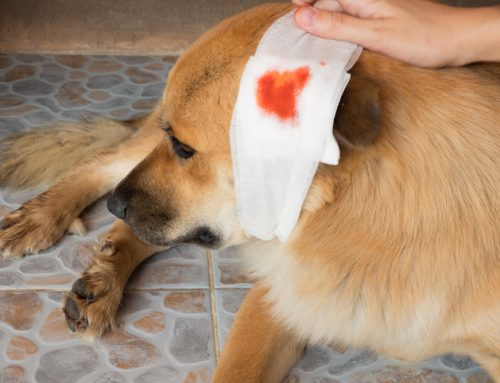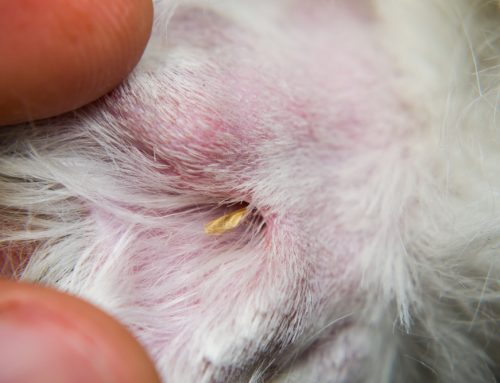

Itchy ears, a rash on the belly, a bald patch, a lump you just found under the fur: skin problems are one of the most common reasons dogs see a veterinarian, and most of them sort into a handful of familiar categories. Allergies, parasites, and infections drive the itchy ones. Hormone imbalances thin the coat quietly, without a single scratch. Autoimmune conditions, inherited disorders, and skin growths round out the list, and nearly every one can be identified with a short list of tests and managed once it has a name.
Cobb & Co. Veterinary Clinic in Elgin sees skin and coat problems every week, and anything raw, smelly, or painful, plus scratching that will not let up, belongs in our same-day urgent care. When the timing is less pressing, a sick pet visit gives us room for the skin scrapings, cytology, and lab work that tell mites, allergies, and hormone disease apart. Sore, itchy skin makes for a tender patient, so we work slowly and use low-stress handling to keep the exam from making things worse. Whatever your dog's skin is doing, get them on our schedule and we will find out what is going on under the coat.
Start Here: Reading Your Dog's Skin and Coat
- Most dog skin problems trace back to allergies, parasites, infections, or hormone imbalances, and each leaves a recognizable pattern.
- Itchy skin usually means allergies, fleas, mites, or an infection, while non-itchy symmetrical thinning points more toward a hormone problem.
- Autoimmune diseases, inherited coat disorders, and skin growths are less common but worth recognizing, since early diagnosis changes the outcome.
- The workup is small and fast: a skin scraping, a stained slide, blood work when hormones are suspected, and a biopsy when the pattern doesn't match the common culprits.
How Do I Tell Normal Shedding From a Real Skin Problem?
Normal shedding is even across the body and leaves healthy skin behind. Anything patchy, symmetrical, red, or flaky is something else. Alopecia is simply the medical term for hair loss, a symptom rather than a diagnosis, which is why the same bald patch can point in a dozen directions.
A few patterns tell us to look closer: hair chewed off rather than shed, bare spots that hold their shape for weeks without refilling, thinning outside the usual spring and fall blowout, licking aimed at one place over and over, or any redness, scale, or odor on the skin itself.
Skin gets a hands-on check at every one of our nose-to-tail wellness exams, which is often how a slow change gets caught while it's still small.
Could Allergies Be Behind My Dog's Itchy Skin?
Allergies are the most common skin problem we diagnose in dogs, and itch is their calling card. The damage to skin and coat comes not from the allergies themselves but from the scratching, chewing, and licking that inflammation drives, plus the infections that move into broken skin.
Three trigger categories account for most cases:
- Environmental: Pollen, dust mites, and mold spores are the usual triggers behind atopic dermatitis, which tends to appear between six months and three years of age and targets the paws, face, ears, armpits, and belly.
- Food proteins: Beef, chicken, dairy, and egg top the list, and food-driven itch runs year-round instead of flaring with the seasons. Recurring ear infections and a dog who won't leave their rear end alone are classic.
- Flea saliva: One bite is enough for a flea-allergic dog, and the damage clusters over the tail base and back legs even when you never find a live flea.
If your dog has been itchy through more than one season, an allergy workup beats riding out another year.
What Parasites and Infections Cause Skin Problems in Dogs?
Even a dog who never leaves the yard can pick something up, and several of the culprits are too small to see without a microscope. Mites, fleas, bacteria, yeast, and fungus all inflame the skin and strip hair. They just do it in different patterns, with wildly different amounts of itch attached.
- Mites: Demodex mites live quietly in the hair follicles of most healthy dogs, but a puppy whose immune system is still catching up or an adult with an underlying health problem can develop patchy bald spots around the eyes and muzzle that barely itch at all. Sarcoptic mange is the opposite, ferociously itchy, drawn to ear margins and elbows, and catching for other dogs and for people.
- Fleas: A small population drives enough scratching to strip the hair over the rump and back legs. Year-round parasite prevention takes most flea problems off the table.
- Bacteria and yeast: Inflamed skin lets ordinary surface organisms overgrow, and a Staphylococcus infection turns into pustules and spreading crusty rings with bare skin in the middle. A hot spot is the fast version, damp to raw within hours. Malassezia yeast is the greasy, musty one, worst in folds, ears, and between the toes.
- Fungus: Ringworm is a fungus rather than a worm, and the circular, scaly bald patches it leaves behind spread easily to other pets and to people.
Telling these apart takes a microscope, not a guess. Skin scrapings, stained slides, and fungal cultures at a sick visit sort mites from infection from fungus, and the answer changes the treatment completely.
Why Is My Dog Thinning on Both Sides Without Scratching?
Symmetrical thinning down both flanks with little or no itch usually points at hormones rather than allergies or parasites. Endocrine hair loss arrives so gradually that the coat can look sparse for months before anyone puts a finger on what changed, and the skin often turns thin, dark, or slow to heal.
Thyroid and Adrenal Conditions
A dull, thinning coat that arrives alongside weight gain, low energy, and skin that has lost its usual spring often traces back to hypothyroidism. It's common in middle-aged dogs, and daily replacement hormone turns it around.
Cushing's disease comes at the coat from the other end, with too much cortisol instead of too little thyroid. Those dogs drink and urinate far more than usual, develop a pot-bellied outline, and lose hair over the trunk while the head and legs stay furry.
Both are diagnosed with blood work rather than by looking. Baseline blood work drawn while your dog feels fine gives us something to compare against later.
Sex Hormones and Topical Medication Exposure
Intact male dogs can develop testicular tumors that produce excess estrogen, and symmetrical flank hair loss is frequently the first visible sign, one that usually reverses after neutering. Intact females can show similar thinning tied to heat cycles.
Dogs also absorb human hormone replacement creams through skin contact or licking, so if anyone in the house uses a topical hormone, cover the site and mention it at the visit.
Which Breeds Are Prone to Inherited Coat Problems?
Dilute-colored dogs, Nordic breeds, Standard Poodles, Akitas, and several of the short-coated bull breeds carry coat conditions written into their genetics. None makes a dog sick, and all are easier to live with once named instead of chased.
| Condition | Breeds most often affected | What it looks like |
| Color dilution alopecia | Blue Dobermans, blue or fawn Great Danes, silver Labradors | Broken, thinning hair over the back and flanks, sometimes with small bumps |
| Seasonal flank alopecia | Boxers, Bulldogs, Airedales, Schnauzers | Sharply outlined dark bald patches on both flanks, often in late winter, frequently regrowing on their own |
| Sebaceous adenitis | Standard Poodles, Akitas, Samoyeds | Heavy scaling, a dull brittle coat, tufts of hair that pull free easily, musty odor |
| Alopecia X | Pomeranians, Chow Chows, plush-coated Nordic breeds | Symmetrical coat loss over the trunk that spares the head and legs, purely cosmetic |
| Zinc-responsive dermatosis | Siberian Huskies, Alaskan Malamutes | Crusting around the eyes, muzzle, and footpads with hair loss over those areas |
Each is a diagnosis of exclusion, so mites, infection, and hormones get ruled out first, and management leans on supportive skin care, targeted nutrition, and for some dogs melatonin, rather than on a cure.
Can My Dog's Immune System Attack Their Own Skin?
Yes, though autoimmune skin disease is far less common than allergies or infections. Pemphigus foliaceus, the form we see most, causes crusting and pustules across the nose, face, and ear flaps. Discoid lupus erythematosus fades and ulcerates the nose, and cutaneous vasculitis inflames small blood vessels, damaging ear tips, paw pads, and the tail.
These conditions mimic infections that never quite clear, which is why a biopsy is usually what confirms them. Most respond to medication that calms the immune system, and sunlight aggravates several of them, so affected dogs do better with shade and sun protection.
What Other Skin Conditions Show Up in Dogs?
A handful of named conditions turn up in exam rooms often enough to be worth recognizing. Most look more alarming than they are, and each has a specific treatment path once identified, so mention anything familiar at your dog's next visit.
- Seborrhea: Oil glands running too hard or not hard enough leave the coat greasy or flaky, and treatment leans on medicated shampoos matched to which version your dog has.
- Solar dermatitis: Sun damage on pink-skinned, thin-haired areas like the belly and nose of dedicated sunbathers, worth taking seriously since chronic damage can eventually turn cancerous.
- Muzzle folliculitis and furunculosis: Chin acne, essentially: inflamed follicles and deep, painful pimples along the muzzle, most common in young short-coated dogs.
- Puppy strangles: Also called juvenile cellulitis, a dramatic facial swelling with crusting and swollen lymph nodes in puppies that responds well to prompt treatment.
- Anal gland impactions and perianal fistulae: Impacted anal glands cause scooting and licking under the tail, while perianal fistulae, painful draining tracts seen most often in German Shepherds, need long-term immune-calming medication.
Are Lumps, Warts, and Growths on My Dog's Skin Serious?
Most skin growths on dogs are benign, but no lump can be judged by look and feel alone. Sebaceous gland adenomas, the small wart-like bumps common on older dogs, are usually harmless. Viral papillomas, true warts caused by a contagious virus, typically clear on their own in young dogs. Other masses are less predictable.
Because a harmless growth and a concerning one can look identical, we sample anything that grows, changes, or bothers your dog. A needle sample or biopsy answers the question a glance can't, and when a mass does need to come off, we perform surgery right here in Elgin.
Can Stress or Pain Make a Dog Lick Their Hair Off?
Repetitive licking is one of the most common ways dogs strip their own hair, and the trigger can be emotional or physical. One spot licked over and over, most often the front of a leg, thickens into a raw, hairless lick granuloma that itches worse the more it gets licked.
Boredom, separation distress, a move, or a changed schedule can all set the habit going. Pain sets off identical behavior: a dog with an aching hip will lick the skin over the joint bare even though the skin itself is healthy, which is why the exam includes an orthopedic check rather than stopping at the fur.
When arthritis turns out to be the driver, treating the joint is what stops the licking. When anxiety is the driver, behavioral counseling gives us a starting point that doesn't involve a cone and crossed fingers.
Do Diet and Bathing Habits Change My Dog's Skin?
Both matter more than most families expect. Healthy skin runs on a steady supply of protein, fatty acids, and zinc, so a shortfall shows up in the coat early, and omega-3 fatty acids reinforce the skin barrier and quiet inflammation over eight to twelve weeks of consistent dosing.
Homemade diets are where deficiencies appear most, so we review what your dog is actually eating before you swap foods on your own.
Regular grooming pulls out dead undercoat and doubles as a weekly hands-on skin check. Grooming incorrectly, like shaving a wire-haired or double coated dog or over-brushing with the wrong brush, can cause permanent damage to the coat.
What Happens During a Skin Workup for Dogs?
A skin workup is mostly detective work, and very little of it is uncomfortable for your dog. We start with questions and a full skin exam, then pick tests based on what the skin is doing and how much itch comes with it.
- The history: When it started, what it looked like at first, what changed with food or season, and whether anyone else in the house has a rash.
- Pattern mapping: Symmetrical flanks, chewed paws, a bare tail base, and a single raw leg each send us down different roads.
- Slides and scrapings: A stained slide takes minutes, and skin cytology tells us whether bacteria, yeast, or both are feeding the problem, while a scraping digs into the follicle looking for mites.
- Fungal culture: When ringworm is on the list, a culture confirms it, though those results take time to grow.
- Biopsy: When crusting, ulcers, or a growth don't match the common patterns, a small punch of skin goes to a pathologist. It's the definitive test for autoimmune disease and skin cancer.
- Blood work and endocrine panels: Thyroid and adrenal testing when the pattern is symmetrical and the itch is missing.
- Allergy evaluation: A strict elimination diet for suspected food triggers, or allergy testing to guide long-term therapy for environmental ones.
Skin that's raw, painful, or spreading fast doesn't need to wait for a scheduled slot, and urgent care is open six days a week for exactly that.
How Are Dog Skin Problems Treated?
Treatment follows the diagnosis rather than the symptom, which is why two dogs with matching rashes can leave with completely different plans. Once we know what's driving it, we map out the approach with you, and a recheck goes on the calendar to confirm the skin is healing.
| What's causing it | What treatment usually involves |
| Allergies | Anti-itch medication, medicated baths, omega-3 support, and an elimination diet or allergy testing for long-term control |
| Mites and fleas | Prescription parasite treatment, year-round prevention, and treating the other pets in the house |
| Bacterial or yeast infection | Antibiotics or antifungals plus medicated shampoo, along with addressing the itch that opened the door |
| Hormonal disease | Daily thyroid replacement or medication for Cushing's, with periodic blood work to adjust the dose |
| Autoimmune disease | Biopsy to confirm, then immune-calming medication with regular monitoring |
| Growths and masses | Measuring and monitoring, needle sampling, and surgical removal when needed |
| Stress or pain licking | Pain control for the source, enrichment and behavior work, sometimes anti-anxiety medication |
| Inherited coat conditions | Supportive skin care, nutrition, and sometimes melatonin |
Rechecks aren't a formality: secondary infections like to reappear as medication tapers, and a dose that fit in March may not fit in July.
What Elgin Dog Families Ask Us About Skin Problems
Will my dog's hair grow back?
In most cases, yes. Once the underlying cause is treated, hair follicles restart on their own schedule: several weeks before you see stubble, two to four months before the patch fills in. Skin that scarred from a deep infection or a chronic lick sore may stay bare, and inherited conditions are managed for comfort rather than restored.
Can I catch anything from my dog's skin problem?
A couple of them, yes. Ringworm and sarcoptic mange both pass to people, which is why an itchy rash or scaly patch on a family member moves the appointment up, and fleas will bite people too. Allergies, hormonal disease, autoimmune conditions, and most bacterial or yeast infections stay with your dog. When something contagious is confirmed, we'll go over home cleanup and which other pets need treating.
Should I try a shampoo or supplement before coming in?
A gentle over-the-counter shampoo won't hurt, but a few home fixes make things worse. Never give human pain relievers or combination allergy products, since the decongestants blended into many of them are dangerous for dogs, and resist shaving or picking at a hot spot. If the skin is raw or smells, home care isn't going to reach it. Call or text us and we'll get you in.
Getting Ahead of Your Dog's Skin Problems
Skin problems in dogs are rarely mysterious once someone looks at them properly. Nearly every condition on this list, from allergies to autoimmune disease, has a treatment behind it, and the hard step is naming which one you're looking at. Cobb & Co. Veterinary Clinic sees dogs across Elgin every week for scratching, rashes, lumps, and coats that quietly stopped looking right, and nobody here is going to shrug at something that worries you. Book a visit and we'll start with the skin and work our way to an answer.