A sudden behavior change is almost never just old age, even in a pet who is genuinely getting up there in years. Aging slows a dog or cat down; it does not make them snap when touched, pace at night, retreat under the bed, or stop using the litter box. Those shifts are symptoms, and something has usually changed in the body first: a painful mouth, sore joints, an infection, a struggling organ, or a brain that no longer reads the world the same way. Finding the cause is what makes your pet comfortable again, and it is often more treatable than it looks.
Cobb & Co. Veterinary Clinic in Elgin treats a new behavior as a clue, because a pet who cannot tell you what hurts will show you through their behavior change instead. A visit for a dog or cat who seems off starts with a hands-on exam, and we have the lab and imaging here to look for the pain, infection, or organ problem behind the change. We keep urgent and same-day appointments open six days a week. If your pet is acting like a different animal, schedule a visit and we will find out why.
When a Personality Change Is Really a Symptom
- Sudden aggression, hiding, pacing, or confusion is usually a symptom of a medical problem rather than a personality change or a training failure.
- Pain from teeth, joints, ears, backs, and skin is the most common hidden driver, and dogs and cats are built to conceal it until their behavior gives them away.
- Brain changes and hormone imbalances alter mood, sleep, and awareness long before anything looks wrong on the outside.
- A change that comes on fast, or that arrives with confusion, crying out, or a lost appetite, deserves a same-day exam instead of a wait-and-see week.
What Medical Conditions Commonly Drive Behavior Changes?
Behavior changes trace back to three territories: pain, the brain and nerves, and the hormones and organs that keep a body steady. The cause is medical far more often than behavioral, so a strange new habit in a dog or cat who looks healthy needs a workup before a training plan.
Plenty of these turn up early at annual nose-to-tail exams, where a weight change, a heart murmur, or a sore jaw is found months before anyone at home sees a difference.
Why Do Pets Act Differently When They're in Pain?
Pain is one of the most common drivers of behavior change, and discomfort usually surfaces as attitude first. A dog who growls when he's lifted or a cat who suddenly lives under the bed is showing pain-driven behavior changes, not a new personality, and those signs skew toward irritability, withdrawal, and resistance to handling long before anything looks like a limp.
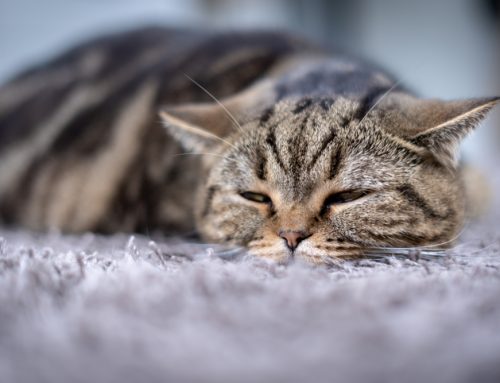
Hiding discomfort is survival instinct, not stoicism, so by the time a household notices, the problem has often been building for weeks. Cats give away more than they mean to through their faces, and the feline grimace scale scores ear position, eye tightening, muzzle tension, whisker change, and head position to turn those small signals into a read on how much a cat hurts.
| Condition | What it can look like at home |
| Dental disease | Dropping food, chewing on one side, head-shy about face rubs, new grumpiness |
| Arthritis | Hiding, stiffness, trouble rising, refusing the jump into the car |
| Intervertebral disc disease | Hunched posture, a yelp when lifted, wobbly back legs, snapping when touched |
| Urinary discomfort | Accidents outside the box, straining, crying in the box, pacing |
| Belly or gut pain | Bowing with the rear end up, off food, pacing, hiding |
| Eye problems | Squinting, startling when approached, bumping into furniture, defensive snapping |
Arthritis is one of the biggest causes of behavior changes in senior pets. A cat with osteoarthritis rarely limps; she stops jumping onto the counter, hesitates at the bottom of the stairs, and gets short-tempered about being picked up. A dog with arthritis may just nap more and move more slowly on walks, or growl when someone touches a sore spot.
What neurological problems make a pet seem disoriented?
The brain is behind some of the most dramatic changes families see, and how fast the change arrives tells us a great deal.
- Cognitive dysfunction: A senior pet who paces at three in the morning, stares at walls, or forgets a housetraining routine he has held for a decade is often showing cognitive dysfunction syndrome, where disorientation, flipped sleep cycles, and changed social interaction build over months instead of overnight.
- Seizures: The minutes to hours after seizure activity can look like an entirely different animal, with pacing, temporary blindness, confusion, and snapping that has nothing to do with temperament. A first episode is worth a call even when your dog seems fine an hour later.
- Vestibular disease: A sudden head tilt, rolling, flicking eyes, and a drunk-looking stagger frighten families badly, and they often trace to the balance system rather than a stroke. Many pets improve a great deal within a week or two.
- Masses in the brain: Brain tumors tend to build slowly, with personality change, circling, and a new seizure in a pet past middle age developing over weeks to months rather than in a single afternoon.
How do hormones and organ disease change behavior?
When hormones or organ function drift out of balance, the result can look exactly like disobedience while the cause sits in the bloodwork. The onset is usually gradual, so these changes get filed under ordinary slowing down until they're impossible to ignore.
A cat past ten who yowls at night, paces the hallway, and eats everything in the bowl while losing weight is describing hyperthyroidism about as plainly as a cat can, and the irritability that comes with it gets read as a behavior problem. Cushing's disease floods the body with cortisol, and the thirst, panting, nighttime restlessness, and indoor accidents that follow are easy to blame on stubbornness or plain old age.
The rest of this group rearranges behavior in its own ways:
| Condition | How behavior shifts |
| Hypothyroidism in dogs | Sluggishness, weight gain, poor exercise tolerance, occasional new irritability |
| Diabetes or an insulin-producing tumor | Blood sugar swings that bring weakness, trembling, disorientation, or collapse |
| Kidney disease | Nausea, appetite loss, withdrawal, restless nights |
| Liver disease and hepatic encephalopathy | Dullness, head pressing, circling, confusion that worsens after meals |
| High blood pressure | Sudden blindness, pacing, yowling, retreat from familiar rooms |
| Hearing or vision loss | Startling and snapping when approached, reluctance to move at night, new anxiety |
Telling one from another takes an exam and real numbers, so in-house bloodwork and ultrasound let us check organ function and look at the organs themselves in one visit instead of sending you home to wait.
When Should You Call Us About a Sudden Behavior Change?
A behavior change that starts abruptly or worsens by the day should be seen the same day, especially when aggression or disorientation is part of it. Acting early keeps people from getting bitten and finds pain while it's still simple to treat.
- Confusion, circling, or lost balance that develops within hours rather than months.
- Crying out when moving, or a yelp the moment your pet is lifted, which often points at the neck or back.
- Limping or trouble standing on stairs and floors your dog handled fine last week.
- Low energy or unusual withdrawal: Lethargy that stretches past a day, or that arrives with appetite loss or hiding, is one of the clearest same-day signals a pet can give you.
- Sudden changes in urination and defecation, especially in male cats who are using the litterbox more frequently or straining.
A few well-meant moves make things worse. Punishing a growl teaches your pet to skip the warning, and the next signal is a bite with nothing in front of it. Keep your own medicine cabinet closed while you wait. Ibuprofen and naproxen cause stomach ulcers and kidney failure in dogs and cats, and a cat's liver has no way to break down acetaminophen. Give your pet room, keep kids and other animals away from the sore spot, and jot down what you're seeing: when it started, what sets it off, how they're sleeping, and anything that changed at home.
We keep urgent care six days a week for exactly this kind of visit, and calling ahead lets us have a room ready. When we're closed, a seizure that won't stop, collapse, labored breathing, or a cat straining without producing urine belongs at an emergency hospital right then.
What Happens at a Visit for a Behavior Change?
The appointment opens with your story, moves to a full physical exam, and then goes to lab work or imaging based on what the hands find. Many cases are sorted out in that first visit.
Much of chronic pain assessment happens in what you report rather than in what your pet shows us, since the car ride and an unfamiliar room flood a pet with enough adrenaline to hide the stiffness that's obvious on your kitchen floor. A video of the stairs, the litter box, or the 3 a.m. pacing gives us the real version.
If balance or awareness is part of the picture, a neurological exam checks reflexes, posture, eye movement, and how your pet places their feet. Blood and urine testing rules metabolic causes in or out, digital X-rays show us joints, spine, and chest, and ultrasound looks inside the abdomen. MRI and CT are done at specialty hospitals, so when a brain or disc problem needs that level of detail, we refer to a veterinary neurologist and coordinate the appointment for you.
None of it works on a terrified patient. Our team includes Fear-Free Certified Professionals and Cat-Friendly Certified Professionals, and low-stress handling is how a sore, worried animal gets through an exam that tells us something useful.
How Do We Treat a Behavior Change Once We Know the Cause?
What the exam and lab work turn up decides the plan, and behavior usually settles as comfort returns.
- Pain and inflammation: Prescription anti-inflammatories and pain medications made for dogs and cats, gabapentin for nerve pain, joint injections, and weight management carry most of this work. Laser therapy adds drug-free relief for arthritic joints, sore backs, and disc injuries, and we offer it here.
- Oral pain: Treating dental disease produces one of the fastest turnarounds in veterinary medicine, and families regularly tell us their pet is chewing on both sides and playing again within a week or two of a cleaning and extractions.
- Hormone and organ disease: An overactive thyroid, diabetes, cortisol excess, and kidney disease all have targeted treatment, and mood tends to follow the lab values back toward normal.
- Brain and nerve conditions: Anti-seizure medication, care for a vestibular flare, and diets and supplements aimed at cognition can steady the nights and slow a decline.
- Behavior support: Behavior counseling rebuilds confidence once the pain is handled, because a dog who learned that hands hurt needs help unlearning it.
- Quality of life: When a condition can't be fixed, we'll weigh the good days against the hard ones with you, honestly, including end-of-life care when that's where things stand.
How Can You Keep Your Pet Comfortable at Home?
Comfort at home comes down to footing, rest, predictability, and gentle hands, and small changes often make a visible difference inside a week.
- Rest and footing: A thick orthopedic bed out of the foot traffic gives sore joints a real break. Runners over hardwood, a ramp to the couch, and a litter box with a low entry keep a stiff pet from giving up on things they need to do.
- Predictable days: Meals, walks, and bedtime at the same hours steady a confused senior more than any single product. A night light helps a dog or cat with failing vision find their way.
- Gentle handling: Approach from the front, lift under the chest and hips rather than around the middle, and let a painful pet come to you. Guests and kids need those same instructions.
- Mental work: Food puzzles, snuffle mats, and two-minute training games keep a slowing brain busy without asking anything of aching joints.
- Tracking: A weekly at-home once-over, checking gums, ears, coat, new lumps, and how easily your pet rises from a lying position, turns a vague sense that something is off into the dates and details that make the next visit productive.
Questions between appointments are part of this, so call or text us when something shifts and you aren't sure whether it's worth coming in.
Questions Elgin Families Ask About Sudden Behavior Changes
Can stress alone change my pet's behavior, or is it always medical?
Stress can absolutely change behavior, and a move, a new baby, construction next door, or a schedule change will rattle plenty of dogs and cats. The catch is that stress-driven and pain-driven behavior look identical from the couch, and a medical cause left alone keeps getting worse while the household tries to fix the environment. We rule the body out first, then work on triggers and routines. Both can be true at once, since a pet in chronic pain has far less capacity to cope with change.
Do puppies and kittens have medical reasons for sudden behavior changes too?
They do, and young animals have less reserve than adults, so a day of hiding or refusing food matters more. A puppy or kitten who suddenly cries when touched, stops playing, or seems spacey may have an injury, a swallowed toy, a heavy parasite load, an ear infection, low blood sugar in a toy breed, or a liver shunt. Early seizures happen at this age as well. A sharp change in a baby animal is not a phase to wait out.
My cat stopped using the litter box. Is that behavioral or medical?
Treat it as medical until proven otherwise. Urinary inflammation, crystals, stones, kidney disease, diabetes, and arthritis that makes a tall box hard to climb into all send cats elsewhere in the house. A male cat straining in the box with nothing coming out is an emergency that can't wait for our next open hour, which means an emergency hospital when we're closed. Once the medical causes are cleared, box style, litter, location, and household stress are the next places to look.
Helping Your Pet Feel Like Themselves Again
Sudden aggression, hiding, or confusion almost always means something hurts or something in the body has changed, and finding the cause usually brings real relief and lowers the risk of someone getting hurt. Cobb & Co. Veterinary Clinic in Elgin treats these visits as detective work, and the best clues come from you.
If your dog or cat has changed in a way you can't explain, book a visit and let's get to the bottom of it.