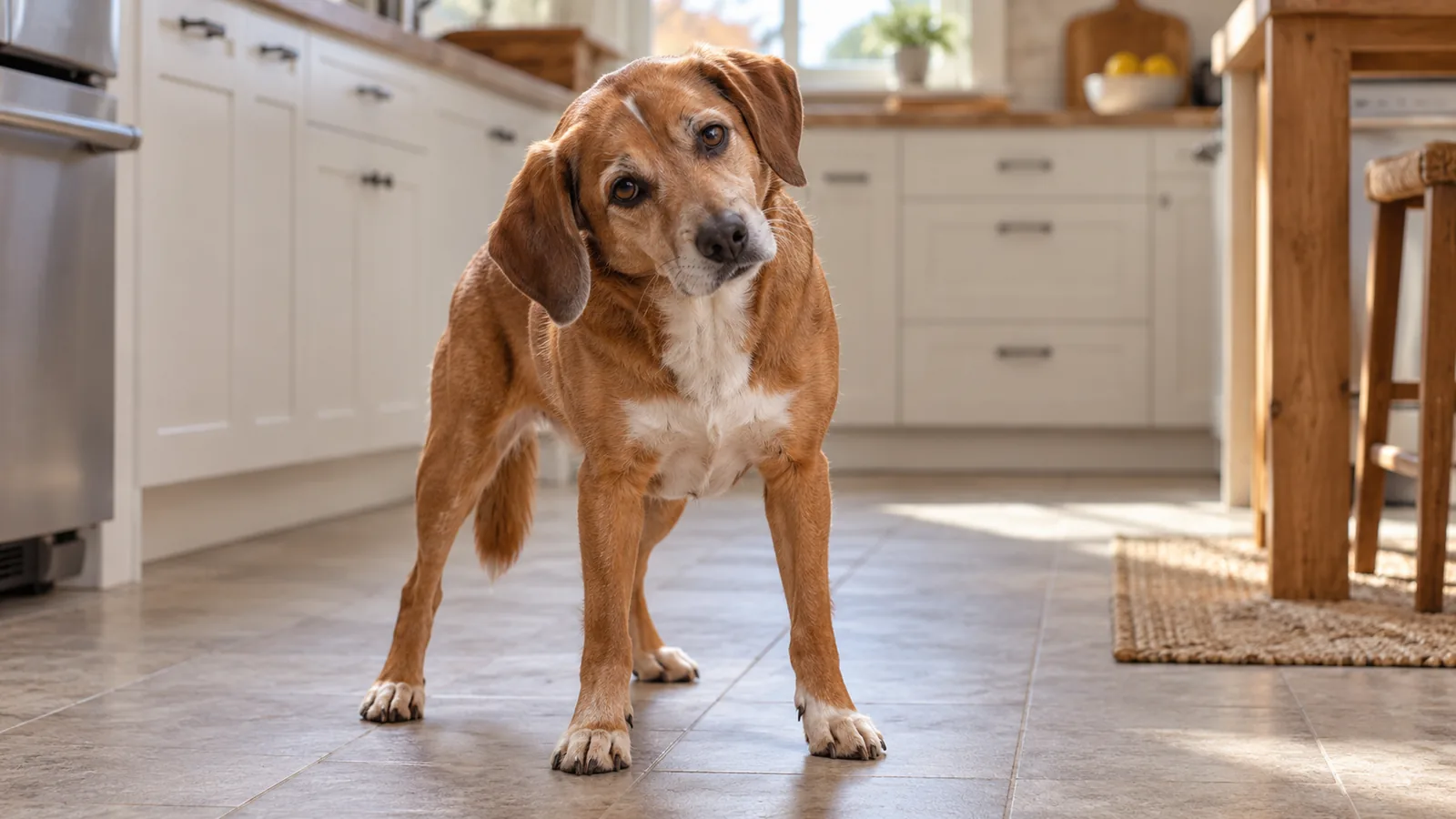
A head tilt means something has gone wrong in your pet's balance system, either in the inner ear or deeper in the brain, and it needs to be looked at today rather than at the end of the week. Ear infections, toxins, a stroke, a growth, and the sudden vestibular disease that shows up in older dogs and occasionally cats can look nearly identical in the first hours, down to the circling and the darting eyes. Each of these calls for its own treatment and carries a very different outlook, and telling them apart early is what gives your pet the best chance of getting steady on their feet again.
Almost every call about a sudden head tilt brings the same two questions: is this a stroke, and will my dog be like this for good? Neither one can be answered over the phone, which is why Cobb & Co. Veterinary Clinic in Elgin saves room for same-day urgent care six days a week, so your pet does not have to stay dizzy and stumbling while you wait for an appointment. A sick pet visit starts with a hands-on neurologic exam that tells us whether the trouble is more likely coming from the inner ear or from the brain, and we recommend bloodwork to look for causes that start elsewhere in the body, with slow, gentle handling and plain answers as we go. Give us a call so we can get your pet in today.
Sudden Head Tilt: The Fast Version
- A head tilt is a balance problem, and the question is whether it starts in the inner ear or the brain.
- Ear infections are among the most treatable causes. Strokes, masses, brain inflammation, and medication reactions need very different plans.
- Idiopathic vestibular disease in older dogs looks catastrophic on day one and often improves within about 72 hours, though a slight tilt can stay for good.
- A neurologic exam, an ear exam, and bloodwork narrow the list quickly, and MRI or CT happens at a specialty hospital when the exam points toward the brain.
What Is the Vestibular System, and Why Does a Problem There Tilt My Dog's Head?
The vestibular system is your dog's balance center, a loop running from the inner ear to the brainstem and cerebellum that tells the body which way is up. When part of that loop stops working, the head tilts toward the weaker side, walking turns into staggering, and the eyes flick rapidly back and forth.
Vestibular disease in dogs tends to arrive overnight with no warning, and the idiopathic form in older dogs often starts improving within about 72 hours. Idiopathic means no cause is ever found, and it's the most common version in seniors. Cats get a similar syndrome, less often.
| What we check | Peripheral (inner ear) | Central (brainstem or cerebellum) |
| Strength | Normal, just unsteady | Weakness, often worse on one side |
| Paw placement | Correct, even while wobbling | Paws knuckle under or land in the wrong spot |
| Awareness | Alert and responsive | Can be dull, slow, or disconnected |
| Eye movement | Flicking side to side | Flicking that may be vertical or change direction |
| Typical outlook | Generally better, often treatable | More guarded, more intensive care |
Most dogs in a vestibular episode stay alert, scared and nauseated but still knowing you. A dog who's dull or hard to rouse means something different, and neck pain, an eye injury, or a sore ear can also make a dog hold their head crooked. If the tilt started today, book a same-day sick visit so we can examine your dog while the signs are freshest.
Could This Just Be an Ear Infection?
An ear infection is one of the most fixable causes of a head tilt, and which part of the ear is involved decides whether balance is affected at all. Head shaking, a paw working at one ear, flinching during a yawn, and chewing on one side usually come first, often days before the head starts to lean.
Otitis externa, inflammation of the outer ear canal, brings itching, odor, and discharge, but it stops short of the balance organs and rarely tips a dog's head on its own. Once infection moves past the eardrum, otitis media and interna can involve the balance apparatus and the facial nerve together, so a dog or cat may tilt, circle, and droop on one side of the face all at once.
Allergies drive many of these, so three ear infections in a year points to something deeper than hygiene. Floppy ears, narrow or hairy canals, and polyps raise the odds too. Diagnosis is quick: a look down the canal, a swab read under the microscope here to tell bacteria from yeast, and sometimes digital X-rays of the bone around the middle ear. Treatment runs several weeks of antimicrobials plus anti-inflammatory medication, with a recheck to confirm the ear is truly clear rather than just less itchy.
Grass Awns in the Ear Can Cause a Head Tilt
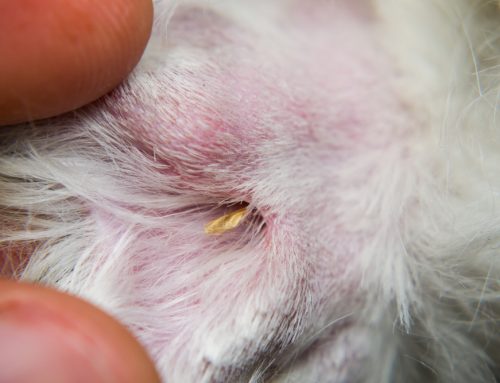
Foxtails and similar grass awns carry barbs that travel in one direction only, so an awn in an ear canal keeps working deeper until someone removes it, sometimes far enough to rupture the eardrum. The signs come on fast: violent head shaking, pawing at one ear, crying when it's touched, and the head held to that side. Getting one out usually takes sedation so the whole canal can be examined and flushed, followed by medication for the irritation left behind. After a walk through tall grass or along the Fox River trails, run your fingers over the ears, armpits, and between the toes, especially in late summer.
When Does a Head Tilt Mean Something in the Brain?
A head tilt points toward the brain when the balance trouble doesn't come alone. An inner ear problem makes a dog dizzy and may droop one side of the face, but strength, awareness, and paw placement stay intact. Once the brainstem or cerebellum is involved, those go too.
- Masses: Brain tumors pressing on the brainstem or cerebellum add signs an ear infection never produces: seizures, behavior changes, one-sided weakness, knuckling paws, and dullness. They're far more common in middle-aged and older pets, and meningioma is the most frequent type in dogs and cats.
- Vascular events: Strokes happen in an instant when blood flow to part of the brain is cut off or a vessel bleeds, and they bring an abrupt tilt, weakness, strange eye movements, or a change in awareness that wasn't there an hour earlier. Kidney disease, high blood pressure, and clotting disorders raise the odds, so we recommend bloodwork and a blood pressure check to look for the reason behind it. Some dogs improve steadily over days to weeks, and others plateau with a lasting deficit.
Confirming either one takes an MRI or a CT scan at a specialty hospital, and we can help set that referral up.
Can a Problem Somewhere Else in the Body Throw Off My Dog's Balance?
Balance depends on healthy nerves and normal blood chemistry, so organs with no connection to the ear can still produce a wobbling, circling dog. Thyroid and liver disease are the two we look for most often.
- Thyroid imbalance: Hypothyroidism usually starts with weight gain, a dull thinning coat, cold intolerance, and ear infections that keep coming back, long before anyone connects it to balance. Golden Retrievers, Dobermans, and Labradors are affected more often than other breeds, and a blood panel settles the question.
- Liver disease: Portosystemic shunts are abnormal vessels that route blood around the liver instead of through it, so toxins reach the brain and produce circling, head pressing, and disorientation, often worst an hour or two after a meal. The same picture, called hepatic encephalopathy, can also follow sudden liver failure. Bloodwork, a bile acids test, and ultrasound sort it out, and we'll talk through whether your dog's surgery belongs here or with a boarded surgeon.
Annual wellness exams with screening labs at our Elgin clinic catch a thyroid or liver value as it starts to drift, while it's still a number on a page and not a dog who can't stand up.
Can an Infection, a Diet Problem, or a Medication Cause a Head Tilt?
Three more causes work on the brain itself rather than the ear: inflammation inside the brain, a thiamine gap from an unbalanced diet, and a reaction to a drug your dog is already taking. Each can come on within a day or two, and each one is far easier to treat early than late.
- Inflammation of the brain: Meningitis and encephalitis pair balance loss with fever, a painful neck, behavior changes, and sometimes seizures, and the trigger can be an infection or the immune system turning on the nervous system. Telling those apart takes spinal fluid analysis at a referral hospital, because antimicrobials and immune-suppressing drugs pull in opposite directions.
- A nutritional gap: Thiamine deficiency brings on wobbling, seizures, and a dog who seems mentally far away within days, usually with a lot of raw fish, an improperly formulated diet, or weeks of vomiting behind it, and it turns around fast when supplementation starts early. A complete, balanced diet prevents it, and nutritional counseling is worth asking about if you cook at home or feed raw.
- A medication reaction: Metronidazole toxicity is the best known medication cause, showing up as sudden staggering, disorientation, and weakness after high doses or long courses, with gradual improvement once the drug is stopped. Call about any new neurologic change in a dog on medication rather than waiting for the next recheck.
Can a Head Injury Cause a Tilt?
Two causes are injuries rather than illnesses: a blow to the head, and a grass awn working its way down an ear canal. Both need to be seen the same day, and both are easy to miss if nobody saw the moment it happened.
After a car accident, a fall off the deck, or a kick from a larger animal, head trauma can injure the balance centers directly, so we look carefully for skull fractures, swelling, and bleeding inside the skull. Treatment focuses on holding blood pressure steady, controlling pressure around the brain, and supporting oxygen. Digital X-rays show a fracture, and the first day or two of monitoring shows whether your dog is improving or sliding backward. A daytime injury can be seen here with same-day urgent care, and an overnight one shouldn't wait until morning.
How Do We Tell an Ear Problem From a Brain Problem?
The exam and your history do most of the sorting, not a scanner: when the tilt began, how fast it changed, what your dog could have gotten into, what medications they're on, and what else has been off lately. The exam itself works through the cranial nerves, coordination, paw placement, and the way your dog crosses the floor.
A dizzy, nauseated dog wrestled into position shows us less than one allowed to move at their own pace, which is why our team with Free certified professionals takes these exams slowly.
The workup then follows what the exam found: an ear exam and swab, bloodwork covering thyroid, liver, kidney, and blood sugar values, X-rays of the middle ear, and ultrasound when blood values point at the liver or kidneys. None of those show the brain itself, which is what sends a case on for MRI or CT.
What Does Treatment Look Like Once We Know the Cause?
Treatment follows the cause, which is why the diagnosis comes first. Some dogs need nothing beyond anti-nausea medication, fluids, and a few quiet days. Others need weeks of medication, a diet change, surgery, or a plan built entirely around comfort.
| Cause | Treatment usually involves | What to expect |
| Idiopathic vestibular disease | Anti-nausea medication, fluids if they won't drink, rest on padded footing | Big gains in the first few days, and a slight tilt sometimes stays |
| Middle or inner ear infection | Several weeks of antimicrobials and anti-inflammatory medication, plus a recheck | Steady improvement, though chronic ears may need a deep flush or surgery |
| Hypothyroidism | A daily thyroid tablet with periodic blood rechecks | Gradual improvement over several weeks |
| Liver disease or a shunt | A liver-support diet and medication, or surgical correction | Depends on type and duration |
| Brain inflammation or infection | Antimicrobials or immune-suppressing medication, guided by testing | Often weeks of treatment and close monitoring |
| Stroke or brain tumor | An individual plan: supportive care, medication, radiation, or surgery with a specialist | Varies widely with location and severity |
Surgery has a role in a few of these: removing a polyp or mass from an ear canal, retrieving a foreign body, or correcting a structural problem. When a diagnosis doesn't come with a cure, palliative and hospice care is a real plan: nausea and pain control, footing they can manage, and honest conversations about what a good day looks like.
How Do I Keep My Dog Safe at Home While They Recover?
Keep a dizzy dog or cat's space small for a while. Block the stairs, pad the corners they keep bumping, and keep food, water, and a bed within a few steps of each other. Most pets settle fastest in one quiet room, and a cat does better with the litterbox sitting on the floor than tucked behind a jump.
- Footing: yoga mats, rugs, or folded blankets over hard floors.
- Meals and water: small amounts offered often, with the bowl held steady or raised slightly.
- Getting outside: a harness with a handle, or a towel slung under the belly for a big dog.
- A daily note: which way the tilt leans, how much they ate, whether they're steadier than yesterday.
Never give human pain medication such as ibuprofen or acetaminophen, and check with us before any over-the-counter motion-sickness or antihistamine product. Never pour water into the mouth of a pet who can't hold their head level, because it goes into the lungs easily. Call or text us if your dog slides backward instead of forward, if new signs appear, or if they won't eat or drink. A dog who hasn't eaten in 24 hours needs an exam rather than another day of watching.
Common Questions About Head Tilts in Pets
Will my dog's head tilt go away completely?
Many head tilts clear completely, though not all do. Idiopathic vestibular disease usually steadies over the following weeks, sometimes leaving a slight permanent tilt that never bothers the dog. An ear infection caught and treated tends to clear fully. When a stroke or a mass is behind it, the tilt may stay, and the goal shifts toward comfort and safe footing.
Is a head tilt painful?
The tilt itself isn't painful, but plenty of the causes are, and a middle ear infection hurts. Severe dizziness isn't painful either, yet it leaves a dog miserable and unwilling to move. Pain relief and anti-nausea medication are part of most plans, because a dog who feels less sick starts eating and moving sooner.
My dog is eating and wagging but still tilting. Can this wait a few days?
Still bright and still eating is reassuring, and it does make an inner ear cause more likely than a brain cause, but it isn't a reason to wait. The same tilt can come from an infection, a mass, a stroke, or a medication reaction, and a few of those get harder to treat with every day that passes. An exam either clears the worrying causes off the list or starts treatment while the problem is still simple.
What to Do About Your Dog's Head Tilt Today
Most head tilts turn out to be treatable, and the ones that aren't still come with a clear answer and a plan you can carry out at home. If your dog's head has started to lean, if they're circling, or if their feet aren't landing where they mean to, schedule an evaluation at Cobb & Co. Veterinary Clinic in Elgin and we'll start sorting out where it's coming from.